
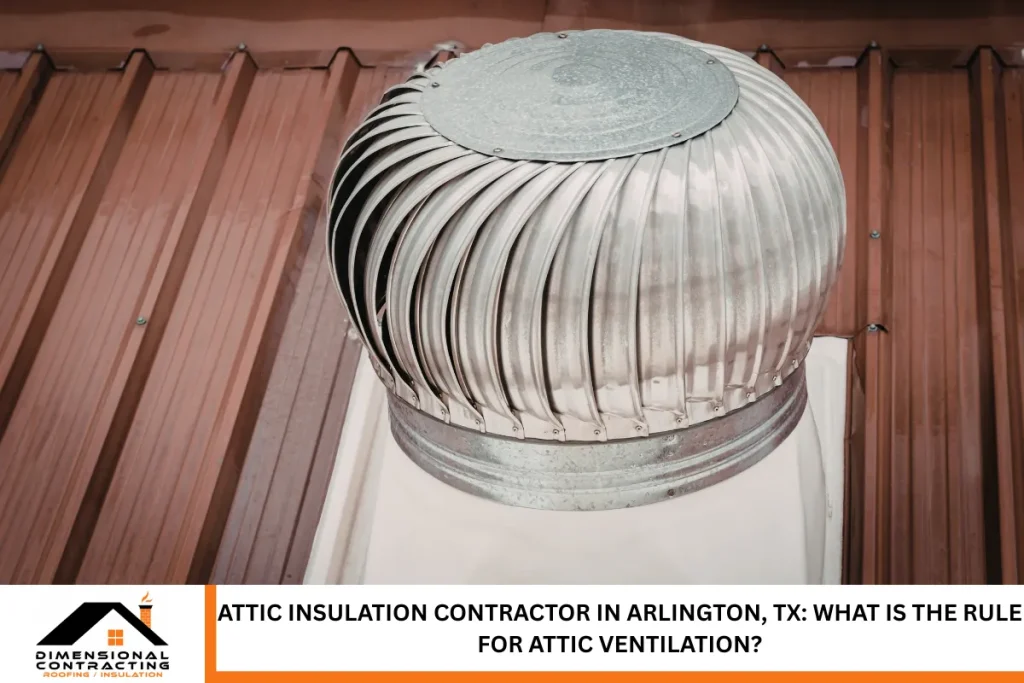

Why Proper Attic Ventilation Matters More Than Most Homeowners Realize
Attic Insulation Contractor in Arlington, TX is usually searched when something already feels wrong inside the home. Maybe your upstairs rooms are harder to cool. Maybe your energy bills keep climbing every summer. Or maybe you’ve noticed a musty smell coming from the attic. In North Texas, extreme heat and seasonal humidity put constant stress on roofing systems and insulation. When airflow is restricted, that trapped heat doesn’t just sit there—it slowly breaks down shingles, reduces insulation effectiveness, and forces your HVAC system to work overtime. Over time, small ventilation issues can turn into expensive structural damage. Understanding the rule for attic ventilation helps homeowners prevent these problems before they spiral into major repairs.
The Core Rule for Attic Ventilation in Texas Homes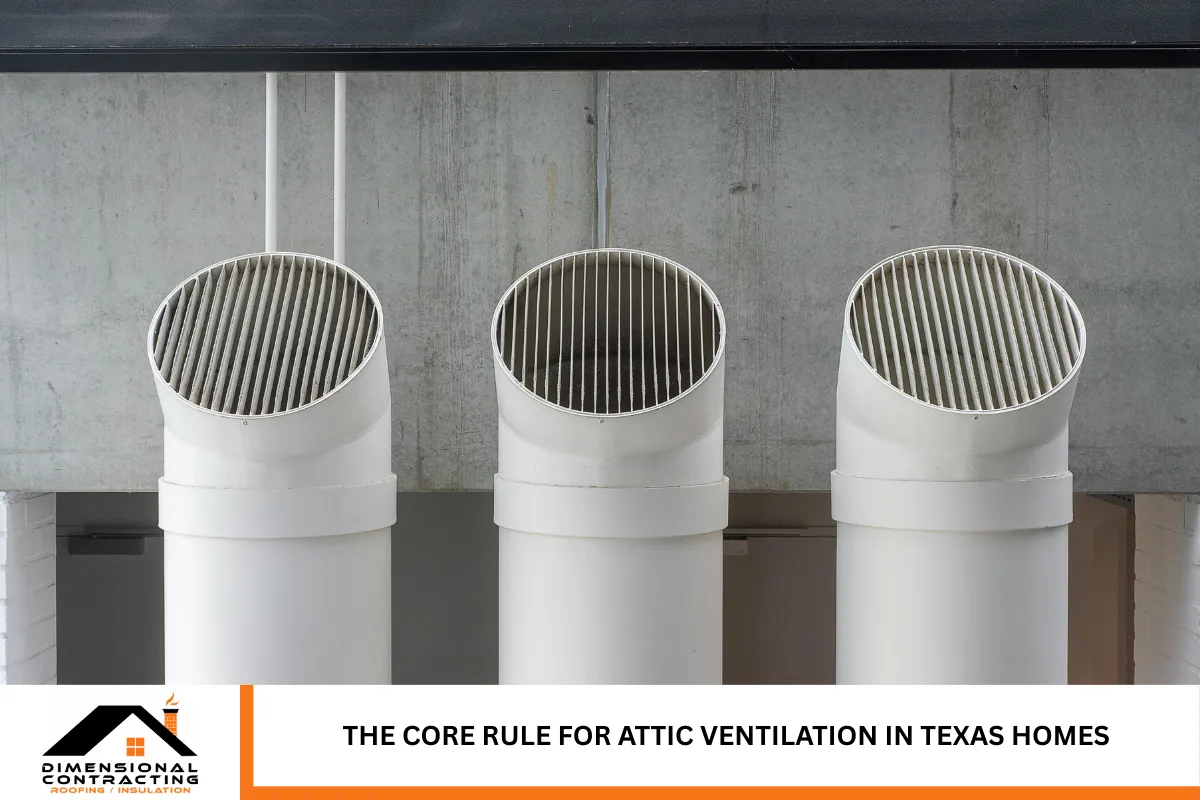
The foundation of proper attic ventilation is based on building code requirements. In Arlington and throughout Texas, residential construction typically follows the International Residential Code (IRC) as adopted by local jurisdictions.
The 1:150 and 1:300 Ventilation Ratio
The standard rule for attic ventilation is:
- 1 square foot of net free ventilation area (NFVA) for every 150 square feet of attic floor space.
However, this requirement may be reduced to:
- 1 square foot of ventilation for every 300 square feet of attic floor space if certain conditions are met.
The reduction to 1:300 is allowed when:
- A balanced ventilation system is installed.
- At least 40% and no more than 50% of ventilation is located in the upper portion of the attic (such as ridge vents).
- The remaining ventilation is located in the lower portion (such as soffit vents).
- A vapor retarder is properly installed on the warm-in-winter side of the ceiling in colder climates (though in North Texas, this is less commonly required due to the mixed-humid climate zone).
Most modern homes aim for the 1:300 ratio because it is efficient and practical when intake and exhaust vents are properly balanced.
Understanding Net Free Ventilation Area (NFVA)
NFVA refers to the actual open area through which air can pass, not the overall size of the vent itself. Manufacturers typically provide NFVA ratings for:
- Ridge vents
- Soffit vents
- Gable vents
- Roof louvers
- Turbine vents
For example, if your attic is 1,800 square feet:
- Under 1:150 rule: 12 square feet of ventilation needed
- Under 1:300 rule: 6 square feet needed
That ventilation must be split evenly between intake and exhaust for optimal airflow.
An experienced attic insulation contractor will calculate this precisely before recommending upgrades.
How Attic Ventilation Works in Arlington’s Climate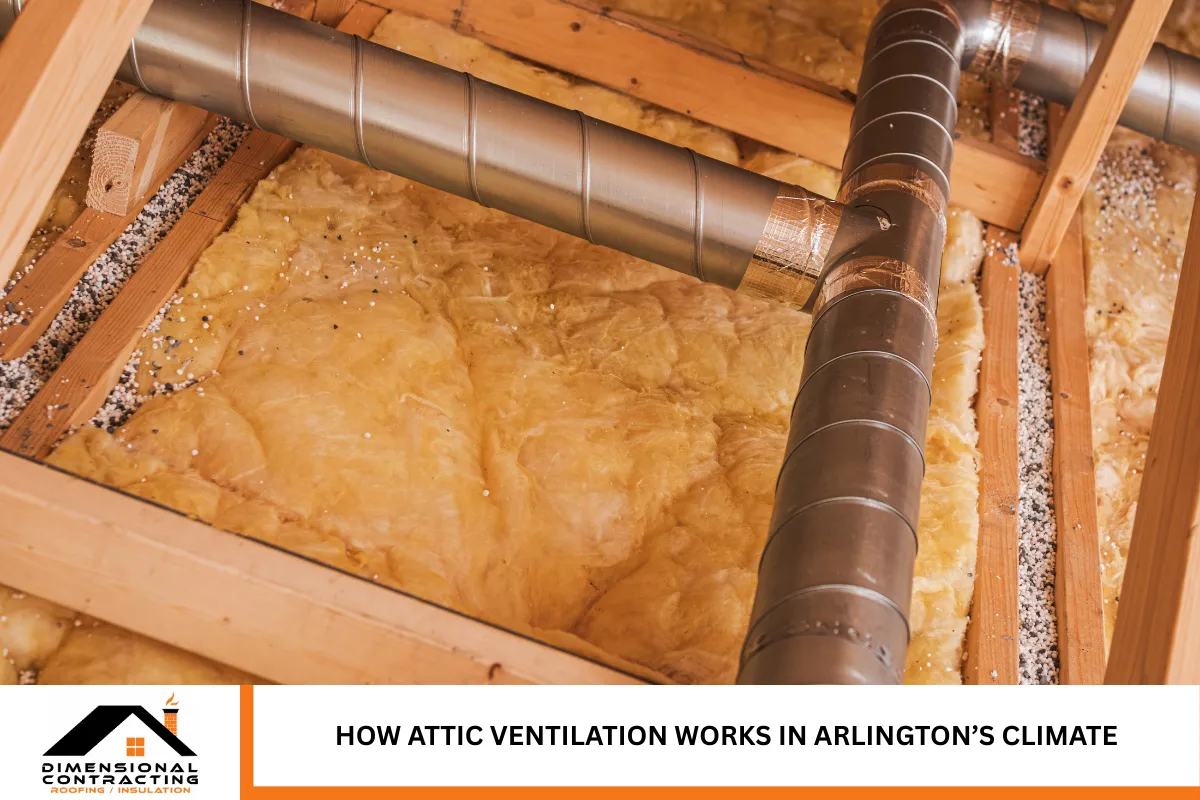
Arlington falls within Climate Zone 3 (Mixed-Humid) according to the U.S. Department of Energy. Summers are long and extremely hot. Humidity levels can also rise significantly during spring and fall.
What Happens Without Proper Ventilation?
Poor attic ventilation can lead to:
- Superheated attic spaces
- Premature shingle deterioration
- Moisture accumulation from indoor air leakage
- Mold growth on roof decking
- Reduced insulation R-value
- Ice dam risk during rare winter freezes
While ice dams are more common in northern states, moisture condensation still poses a risk in Texas homes, especially during sudden cold snaps.
Proper attic ventilation allows:
- Cool air to enter through soffits
- Hot air to escape through ridge or roof vents
- Continuous airflow that regulates temperature and moisture
Types of Attic Ventilation Systems
Choosing the right system is critical. Not all ventilation setups are equal.
Soffit Vents (Intake)
Installed under the eaves, soffit vents allow cooler outside air to enter the attic. They are essential for balanced airflow.
Ridge Vents (Exhaust)
Installed along the peak of the roof, ridge vents allow hot air to escape naturally. They work best when paired with continuous soffit intake.
Gable Vents
Mounted on exterior attic walls. These are less efficient when used alone and can sometimes disrupt balanced airflow if mixed improperly with ridge systems.
Turbine Vents
Wind-driven vents that spin to pull hot air out. Effective in windy areas but not always reliable during still conditions.
Powered Attic Fans
Electric or solar-powered fans actively pull hot air from the attic. These can help but must be installed carefully to avoid creating negative pressure that pulls conditioned air from inside the home.
An attic insulation installer will evaluate the roof structure before recommending the right approach.
Why Insulation and Ventilation Must Work Together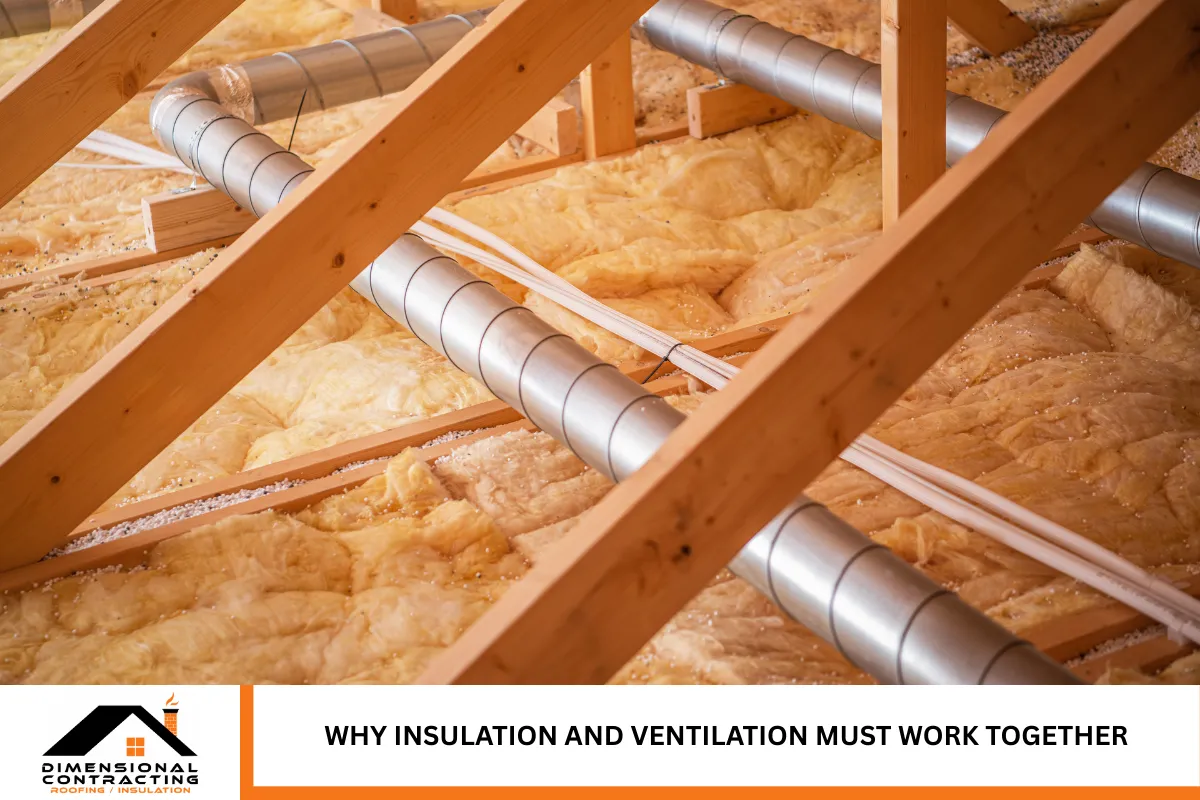
Attic ventilation is only half the equation. Insulation acts as the thermal barrier between your living space and the attic.
If ventilation removes heat but insulation is insufficient, your HVAC system still works overtime.
If insulation is thick but ventilation is poor, moisture and heat become trapped.
A properly designed attic system includes:
- Air sealing to close gaps
- Adequate R-value insulation
- Balanced intake and exhaust ventilation
In Arlington, the recommended attic insulation level is typically R-38 to R-60, depending on the structure and upgrade goals. Blown-in fiberglass and spray foam are common solutions.
Arlington Building Code Considerations
Home improvements in Arlington must comply with local building regulations. While minor insulation upgrades may not always require permits, structural modifications or significant ventilation changes may.
Key compliance points include:
- Following IRC ventilation ratios
- Meeting energy code requirements
- Ensuring fire safety clearances around recessed lighting
- Maintaining proper baffle installation for airflow
A reputable attic insulation contractor ensures work aligns with city requirements and energy efficiency standards.
Read Attic Insulation Contractor in Arlington, TX: What is the Best Way to Ventilate an Attic?
Signs Your Attic Ventilation Is Failing
Many homeowners don’t realize they have a ventilation problem until visible damage appears.
Watch for:
- Extremely hot second floors
- Curling or blistering roof shingles
- Moldy smell in attic
- Rusted nails or fasteners
- High cooling bills
- Insulation that feels damp or compacted
If you notice these warning signs, it’s time for a professional attic evaluation.
How Professionals Calculate Proper Ventilation
A qualified attic insulation installer performs:
- Attic floor measurement
- NFVA calculation
- Intake-to-exhaust ratio check
- Insulation depth inspection
- Air leakage assessment
- Moisture detection
They also inspect:
- Bathroom exhaust ducts (should vent outdoors, not into attic)
- Blocked soffit vents
- Improper mixing of vent types
This thorough process prevents airflow short-circuiting, where air exits before circulating properly.
The Cost of Ignoring Ventilation Issues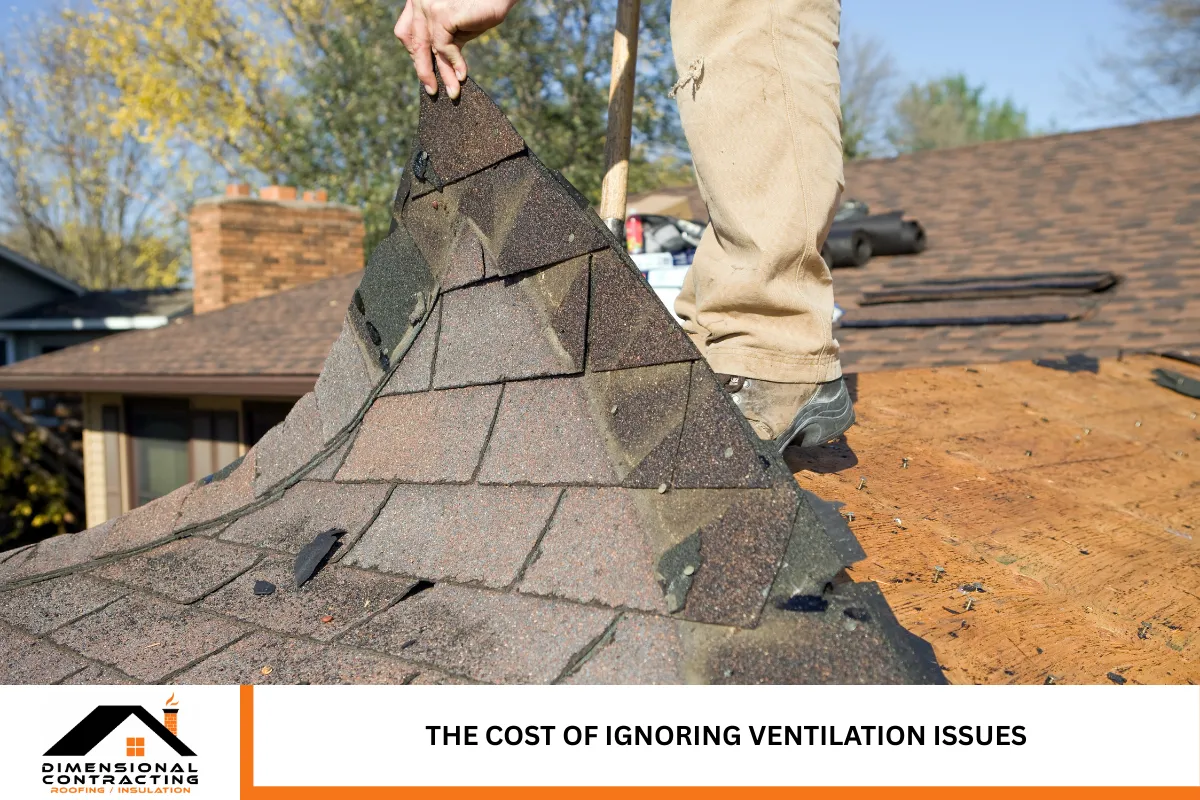
Skipping proper attic ventilation can lead to:
- Roof replacement years earlier than expected
- Mold remediation expenses
- Higher monthly energy bills
- Structural repairs
- Reduced indoor air quality
In Texas heat, roof temperatures can exceed 160°F. That extreme heat radiates downward if not properly vented.
Over time, these issues cost far more than proactive ventilation upgrades.
Energy Efficiency and Utility Savings
Proper attic ventilation improves overall home performance.
Benefits include:
- Lower attic temperatures
- Reduced HVAC strain
- Improved indoor comfort
- Extended roof lifespan
- Stable insulation performance
Many homeowners notice energy savings within the first cooling season after upgrading insulation and ventilation together.
Spray Foam and Ventilation: Special Considerations
Spray foam insulation changes ventilation strategy. When installed as a conditioned attic system:
- Traditional ventilation may be eliminated.
- The attic becomes part of the thermal envelope.
- HVAC ductwork operates in conditioned space.
However, this design must be carefully engineered. Improper spray foam application can trap moisture and create long-term damage.
This is why hiring an experienced attic insulation contractor matters.
Common Ventilation Mistakes to Avoid
Homeowners sometimes attempt DIY fixes that cause more harm than good.
Avoid:
- Blocking soffit vents with insulation
- Mixing ridge vents with powered attic fans improperly
- Installing too much exhaust without intake
- Sealing attic completely without proper foam design
- Ignoring air sealing before adding insulation
Balanced airflow is the key principle.
How Climate Impacts Ventilation Design in North Texas
Unlike colder northern climates, Arlington homes primarily battle heat gain.
Therefore, ventilation strategy focuses on:
- Heat reduction
- Moisture control during humid months
- Preventing attic over-pressurization
Homes built decades ago often lack sufficient soffit vents or ridge ventilation.
Upgrading older homes can dramatically improve comfort and performance.
Choosing the Right Attic Insulation Contractor
When selecting a professional, look for:
- Experience with local code compliance
- Detailed ventilation calculations
- Knowledge of R-value requirements
- Proper installation techniques
- Written estimates
- Warranty options
An attic insulation installer should inspect the entire attic system—not just add material blindly.
Long-Term Protection Starts Above the Ceiling
Proper attic ventilation isn’t optional in Arlington’s climate. It is a structural necessity. When combined with modern insulation standards, it protects your roof, lowers energy bills, and improves indoor air quality.
A well-balanced attic system supports your entire home.
Attic Insulation Contractor in Arlington, TX – Dimensional Contracting & Attic Insulation of Arlington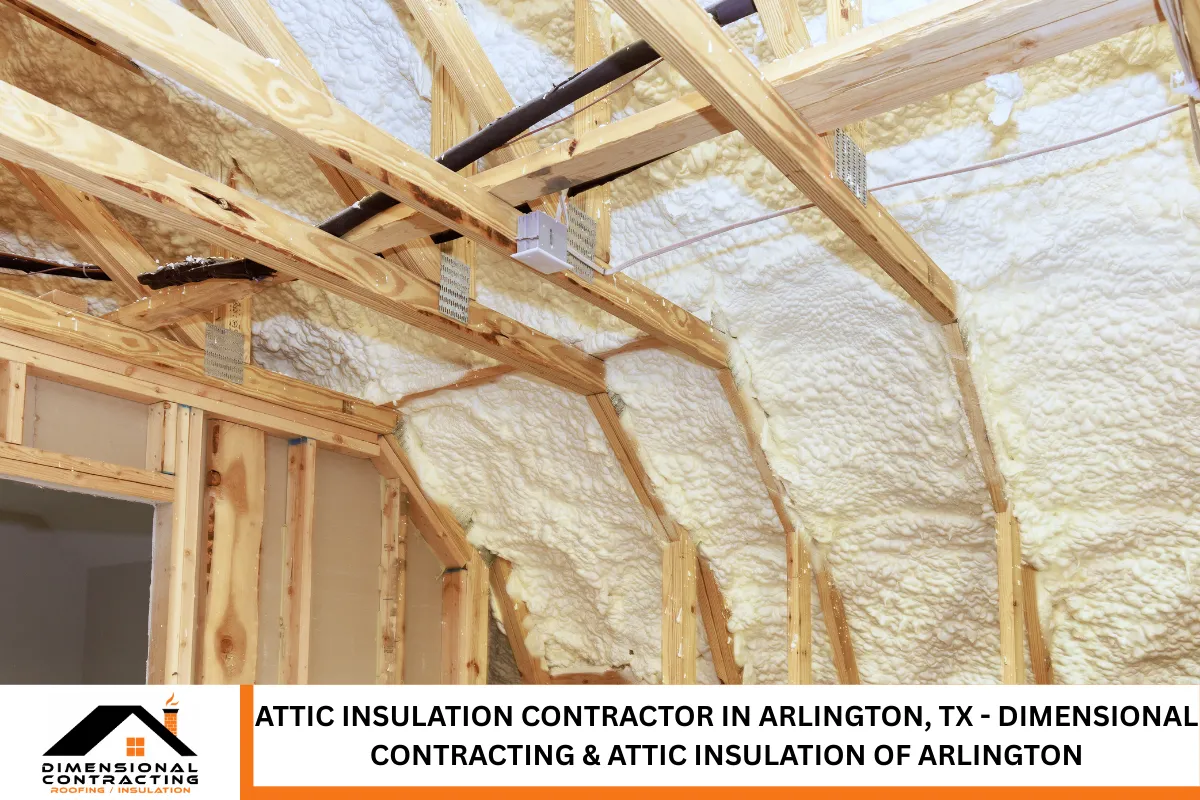
At Dimensional Contracting & Attic Insulation of Arlington, we specialize in designing balanced attic systems that meet Arlington building standards and Texas energy code requirements. As a trusted attic insulation contractor, we carefully evaluate ventilation ratios, insulation depth, air sealing, and moisture control before recommending improvements. Our team ensures proper intake and exhaust airflow to protect your roof and maximize energy efficiency.
We understand how intense North Texas heat impacts attic performance. That’s why we focus on long-term solutions—not temporary fixes. If your home feels too hot or your energy bills are climbing, we’re ready to help. Call us at (817) 502-9282 or fill out our contact form to schedule your attic evaluation in Arlington, Texas today.
Frequently Asked Questions
1. How often should attic ventilation be inspected?
Attic ventilation should be inspected at least once every two to three years, or sooner if you notice temperature imbalances or moisture concerns. Severe storms, roof replacements, or pest activity can also impact vent performance. Regular inspections ensure soffit vents remain clear, ridge vents function properly, and insulation hasn’t shifted to block airflow. A professional evaluation can detect hidden issues like condensation or inadequate intake-to-exhaust balance before they become costly repairs.
2. Can too much attic ventilation be a problem?
Yes, excessive or improperly balanced ventilation can cause problems. If exhaust ventilation significantly outweighs intake, negative pressure may pull conditioned air from inside your home into the attic. This reduces energy efficiency and increases cooling costs. Additionally, mixing incompatible systems, such as ridge vents with powerful attic fans, can disrupt airflow patterns. Proper calculations and balanced design prevent over-ventilation issues.
3. Does attic ventilation help during winter in Texas?
While winters in Arlington are mild compared to northern states, ventilation still plays a role. It helps prevent condensation buildup when warm indoor air rises into a cooler attic. Without proper airflow, moisture can accumulate on roof decking and framing materials. Even short cold spells can create conditions for condensation. Balanced ventilation helps maintain stable attic temperatures year-round.
4. Should bathroom fans vent into the attic?
No. Bathroom exhaust fans should always vent outdoors, never into the attic. Venting into the attic introduces warm, humid air directly into the space, increasing the risk of mold growth and wood rot. Proper ducting should run through the roof or gable wall to discharge moisture outside. If you discover bathroom ducts venting into your attic, it should be corrected promptly.
5. How do I know if my attic insulation meets current standards?
The easiest way to determine compliance is by measuring insulation depth and identifying the material type. In Arlington’s climate zone, most homes should have insulation levels between R-38 and R-60. Older homes often fall below this range. A professional attic inspection can verify R-value, check for compression or moisture damage, and determine whether additional insulation or ventilation improvements are necessary.
Disclaimer: This article is for general informational purposes only and does not replace professional inspection or official building code guidance. Always consult local building authorities or licensed professionals for specific compliance requirements in Arlington, Texas.
Read Arlington Insulation: What Are the Signs You Need Attic Insulation Repair


