
Retrofit Insulation: Adding More Insulation to an Arlington Attic
Your Attic Has Insulation. It Just Does Not Have Enough.
Most Arlington attics we look at have some insulation. It went in when the house was built, it has settled since, and now the tops of the ceiling joists show through it. The house runs hot by mid afternoon and the air conditioner never catches up.
Retrofit insulation means improving the insulation in a home that is already built, as opposed to insulating a house while it is going up. The retrofit most Arlington attics need is a top-up, and that is what this page covers. If what is up there is clean and dry, there is no reason to pull it out. We blow new fiberglass or cellulose over the old layer and bring the whole attic floor up to the depth the attic needs. Nothing gets hauled away, which is why adding insulation to an attic usually costs less than replacing it.
This page is part of our attic insulation service. If you are not sure whether your attic needs more insulation or new insulation, start there.
Clean and dry, but thin or settled? This is your page. Keep reading, or call (817) 502-9282 and we will measure it.
Wet, moldy, or rodents have been in it? Adding more on top buries the problem. See attic insulation replacement.
Not sure what is up there? Start at attic insulation, or call and describe what the house is doing.
When Adding Insulation to an Attic Is the Right Call
Signs It Is Just Thin
You can see the tops of the ceiling joists. The layer is a few inches deep across most of the floor. The rooms under the attic run hot in summer, and the cooling bill climbs every year.
When Topping Up Is Enough
The insulation is dry. There are no droppings, nests, or chewed spots. Nothing smells. There are no stains from an old roof leak. Settling on its own is not a problem. If that describes your attic, the old layer can stay and we add to it.
When It Is Not
If the insulation is wet, moldy, or full of rodent droppings, putting more on top buries the problem instead of fixing it. That job is insulation removal followed by replacement, and we will tell you so before we quote.
What Happens to the Old Layer
It stays. We check its condition, then blow the new layer over the whole floor to the depth in your estimate, so the attic ends up at one even depth rather than a thick patch here and a thin one there.
Sealing Before We Add
Once the new layer is down, the gaps around the attic hatch, the top plates, and the recessed lights are buried and much harder to reach. We seal what we can get to with foam sealant and caulk before we add anything. See attic air sealing.
How Much Gets Added
We measure what is there and work out the gap to the level ENERGY STAR recommends for our climate zone: R-38 added over an existing 3 to 4 inches, or R-49 in total for an attic with little or nothing in it. That target goes in your written estimate before we start, and we show you the finished depth when we are done.
How a Top-Up Goes
-
We measure what is there. Depth in several spots, so the estimate is not based on the one place that looks worst.
-
We check its condition. Dry, clean, and free of pests means it stays. Anything else, you hear about before we quote.
-
We seal gaps and set baffles. So the new layer does not bury air leaks or block the soffit vents at the eaves.
-
We blow the new layer to the mark. Across the whole attic floor, then show you the depth before we leave.
/ FAQS
Frequently Asked Questions
Can you put new insulation on top of old insulation?
Yes, as long as the old insulation is clean and dry. We check it first. Settled insulation is fine to top up. Wet, moldy, or rodent-damaged insulation comes out before anything new goes in, and at that point the job is a replacement rather than a top-up.
How do I know how much insulation my attic has?
Look through the hatch. If you can see the tops of the ceiling joists, the layer is a few inches deep and well short of what ENERGY STAR recommends for our climate zone, which is R-38 added on top of an existing 3 to 4 inches. We measure the depth in several places and tell you the gap.
What is retrofit insulation?
Improving the insulation of a home that is already built, rather than insulating a house while it is going up. It covers everything from adding a layer in the attic to taking out what is there and starting over. The retrofit most homes need is the top-up this page describes: a new layer of loose fill blown over the existing insulation. Homeowners usually just call it adding insulation.
Is adding insulation cheaper than replacing it?
Usually, because nothing has to be removed and the attic does not need to be cleaned first. You pay for the new material and the labor to put it in. The price depends on the size of the attic, how deep the new layer needs to be, and how much air sealing the attic needs first. We measure before we quote.
What goes on top of the old layer?
Blown-in fiberglass or cellulose. Either one can go over existing loose fill or batts of either kind, as long as the old layer is dry. We look at what is there and tell you which one we would use.
Do older Arlington homes usually need more insulation?
Many do. Houses built decades ago were insulated to the standard of the time, and that layer has settled since. Bringing it up to today’s recommended depth is what this service is for. Our Arlington attic insulation page covers the neighborhoods we work in.
The Finished Depth, and What a Homeowner Said
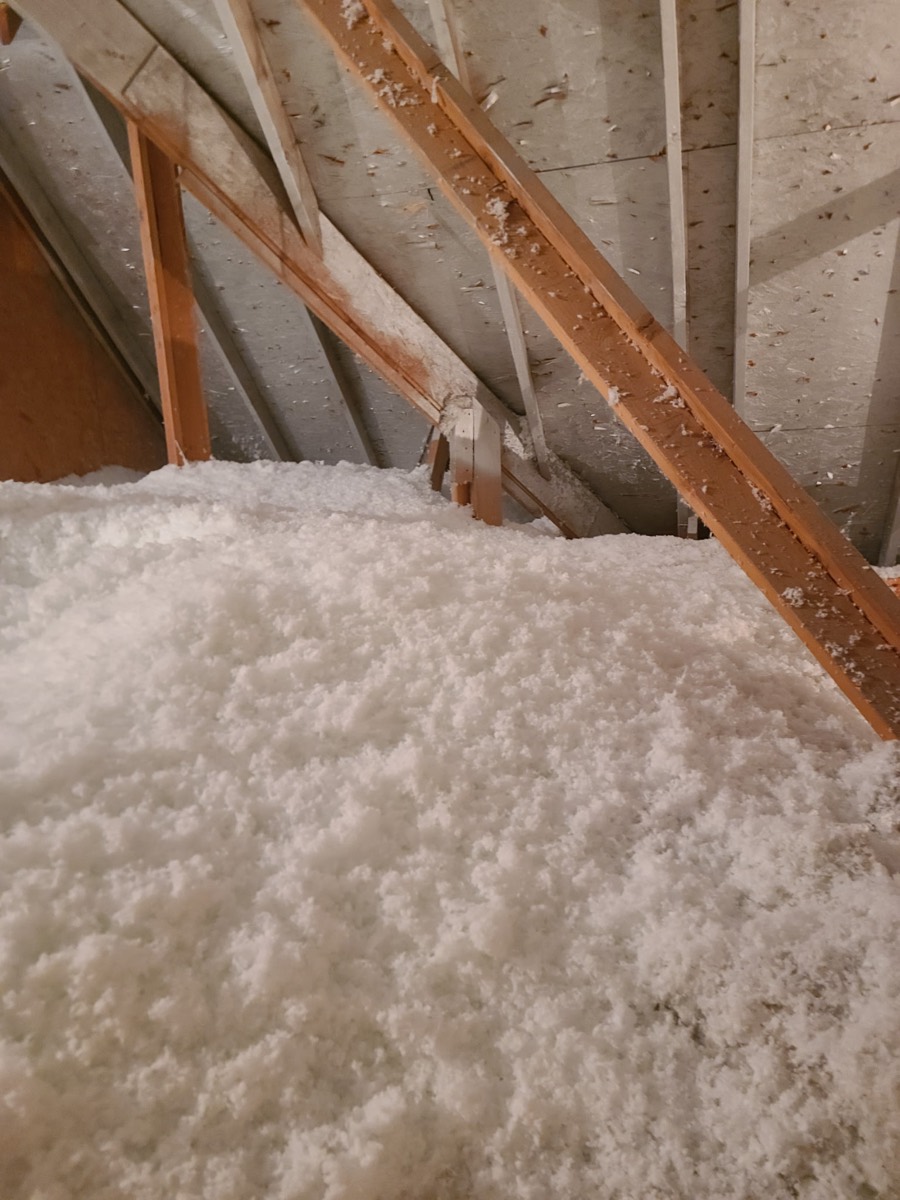
We had an outstanding experience with Dimensional Contracting & Attic Insulation of Arlington! From the initial consultation to the completed project, the entire team was professional, knowledgeable, and incredibly kind. They installed new temperature-controlled attic exhaust fans and added fiberglass insulation to bring our attic up to the recommended level for the Texas heat. They took the time to explain every step of the process, answered all of our questions, and made sure we understood exactly what was being done and why. We can already tell a HUGE difference in the temperature inside our home.
Areas We Serve
Can You See the Tops of the Joists?
Call and we will measure what is up there and tell you how much your attic needs. If the old layer has to come out instead, you will hear that before any price.
We add insulation to attics across Arlington and Tarrant County, on existing homes.